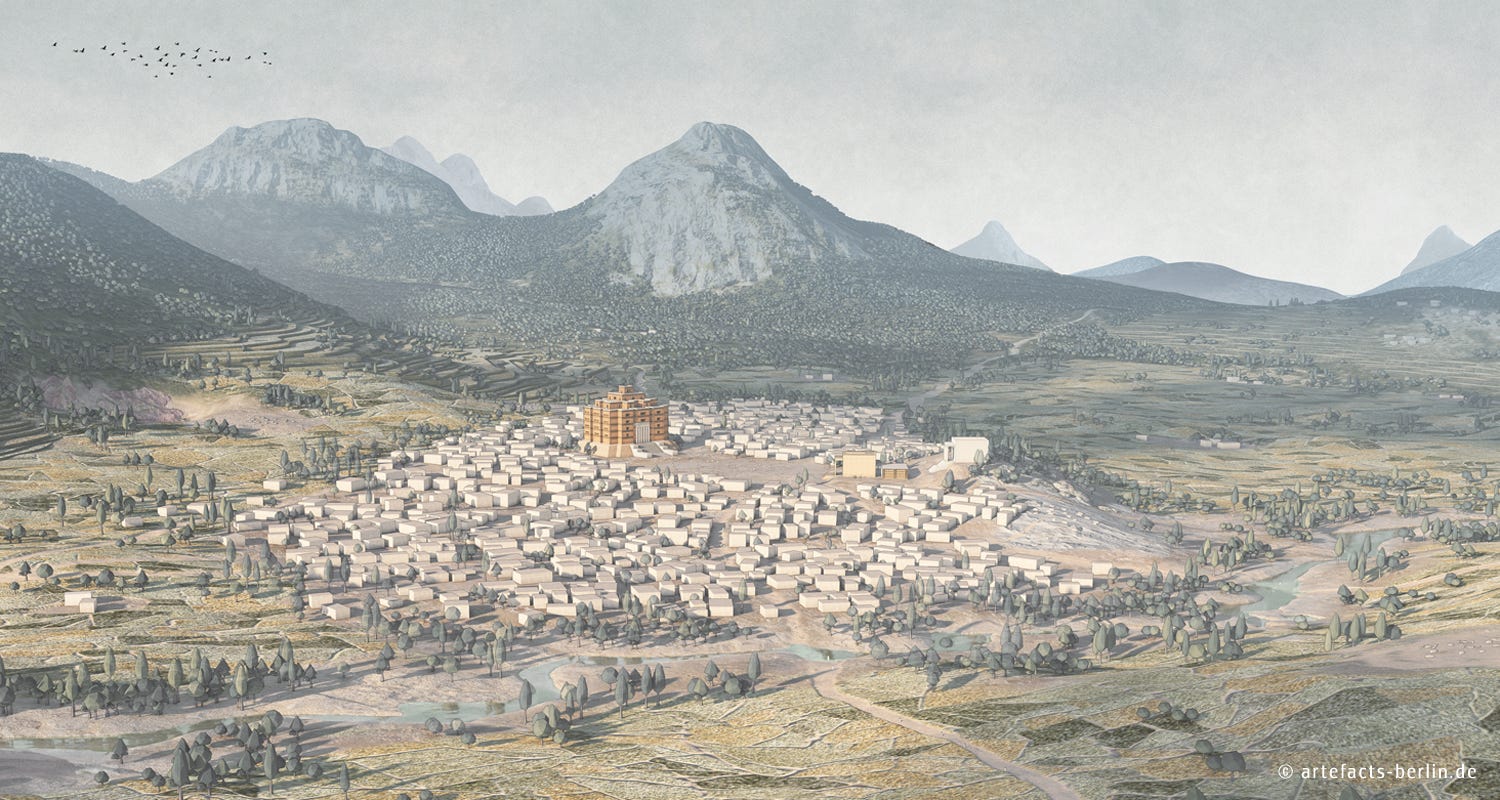
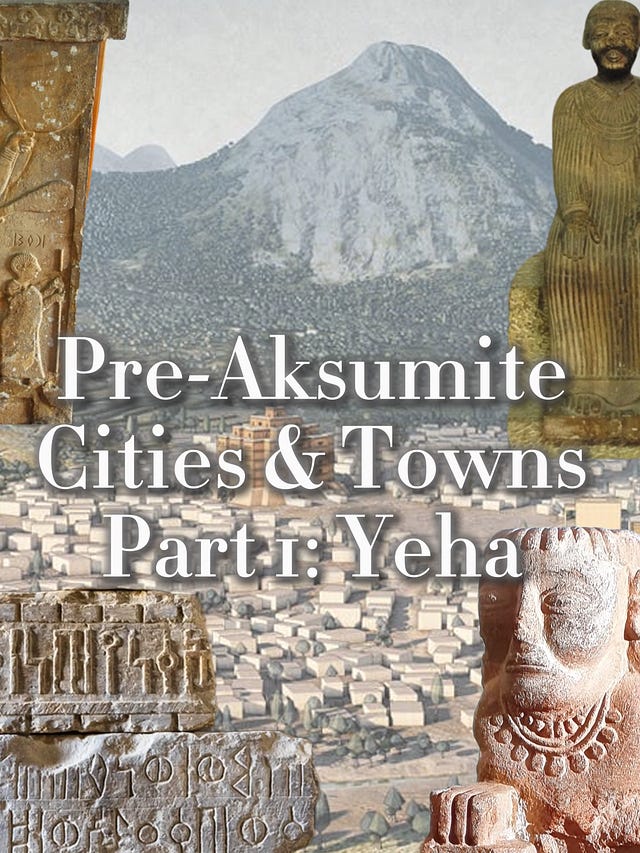
Yeha, likely the capital of the ancient kingdom of DʿMT, boasted a multi-storeyed palace, a grand temple, and elite burial tombs, making it one of the earliest known cities in the region.
After the second millennium BC, references to Punt largely vanish from historical records. Nevertheless, civilisation in the northern highlands of Eritrea and Ethiopia persisted. From the latter half of the second millennium BC, contact with South Arabia grew as South Arabian polities took greater interest in the region, while highland polities regained some of the losses caused by the decline of Egyptian trade. This interaction, driven largely by merchants, intensified over time, with many settling and intermingling with the predominantly Cushitic population, leading to the emergence of a partially Semitic-speaking community.
Dating to the early first millennium BC, Yəḥa’s significance is evident in its remarkably well-preserved structures, unmatched elsewhere in the region. These buildings have strong architectural parallels with the Sabaeans of South Arabia, while also incorporating distinct features native to the northern highlands.
Yəḥa was likely one of the largest urban centres of the “Pre-Aksumite” (first millennium BC) era, its scale and architectural complexity remaining unmatched to this day.
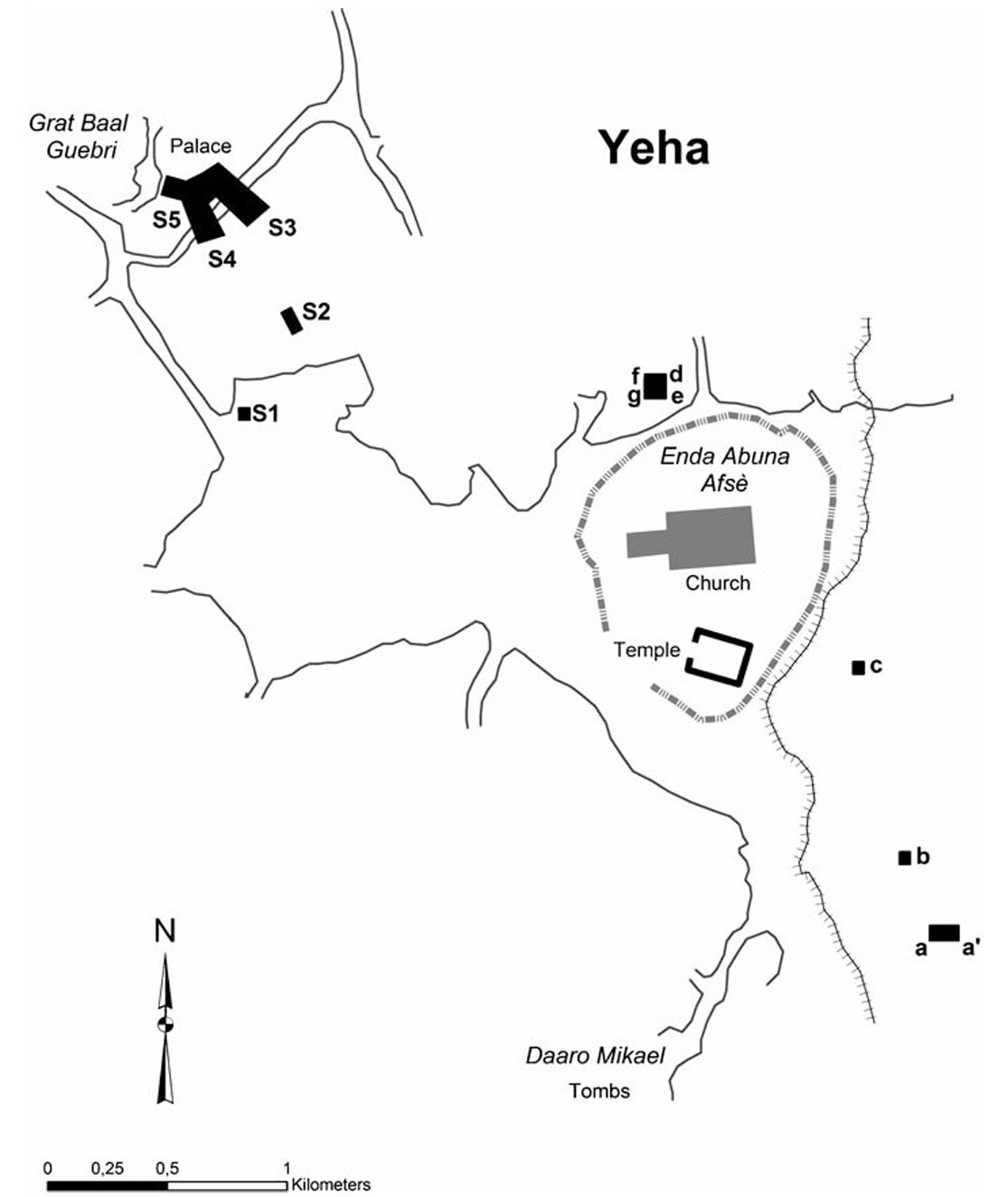
A map depicting the three major pre-Aksumite sites found at Yeha (Source: Reconsidering Yeha, c. 800–400 BC Rodolfo Fattovich, p.g 276)
There are three significant pre-Aksumite structures/sites located at Yəḥa, which I will explore in this article:
Different Views Of The Altar At Meqaber Ga’ewa. Source: The Almaqah Temple of Wuqro in Tigrai/Ethiopia, pg 24.
“Waʾran, the king, who downthrows (the enemies), son of Radiʿum and Shakkatum, the companion, rebuilt (the altar) for Almaqah, when he was appointed the Lord of the temple of Almaqah in Yahaʾ, on instruction of Attar and Almaqah and Dat Hamyim and Dat Baʿdan.” - Source: The Almaqah Temple of Wuqro in Tigrai/Ethiopia, pg 24.
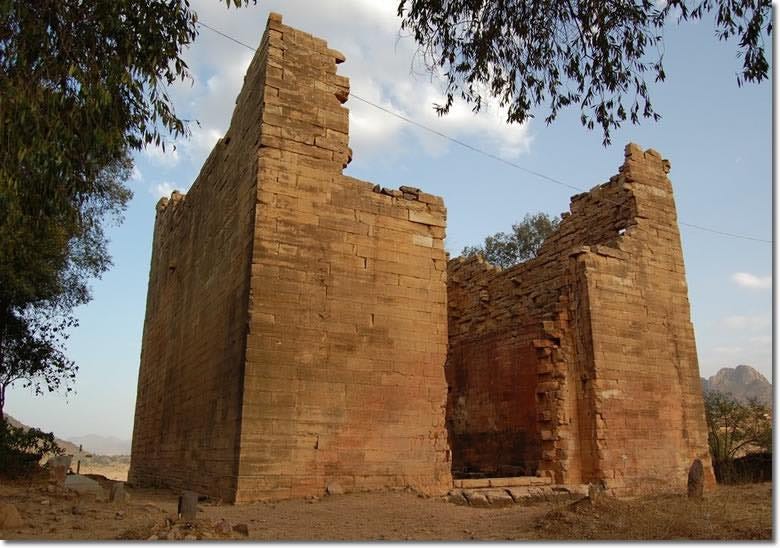
The Great Temple, once a major centre of pagan worship, is the oldest surviving megastructure in the region, largely intact and dating to the DʿMT period. It uniquely blends indigenous and South Arabian architectural styles, and appears to have served primarily as a place of worship for Almaqah3, the South Arabian moon god.
Although researchers initially dated the temple's age to 500 BC, it has since been revised to 800 BC4. Before the creation of the temple, a settlement is thought to have existed in the surrounding area.
Thanks for reading HYohannes! Subscribe for free to receive new posts and support my work.
Excavations & History
Various Artifacts Found At Yəḥa, From Left To Right: A Vase, Christian Ritual Object & Bronze Cauldron
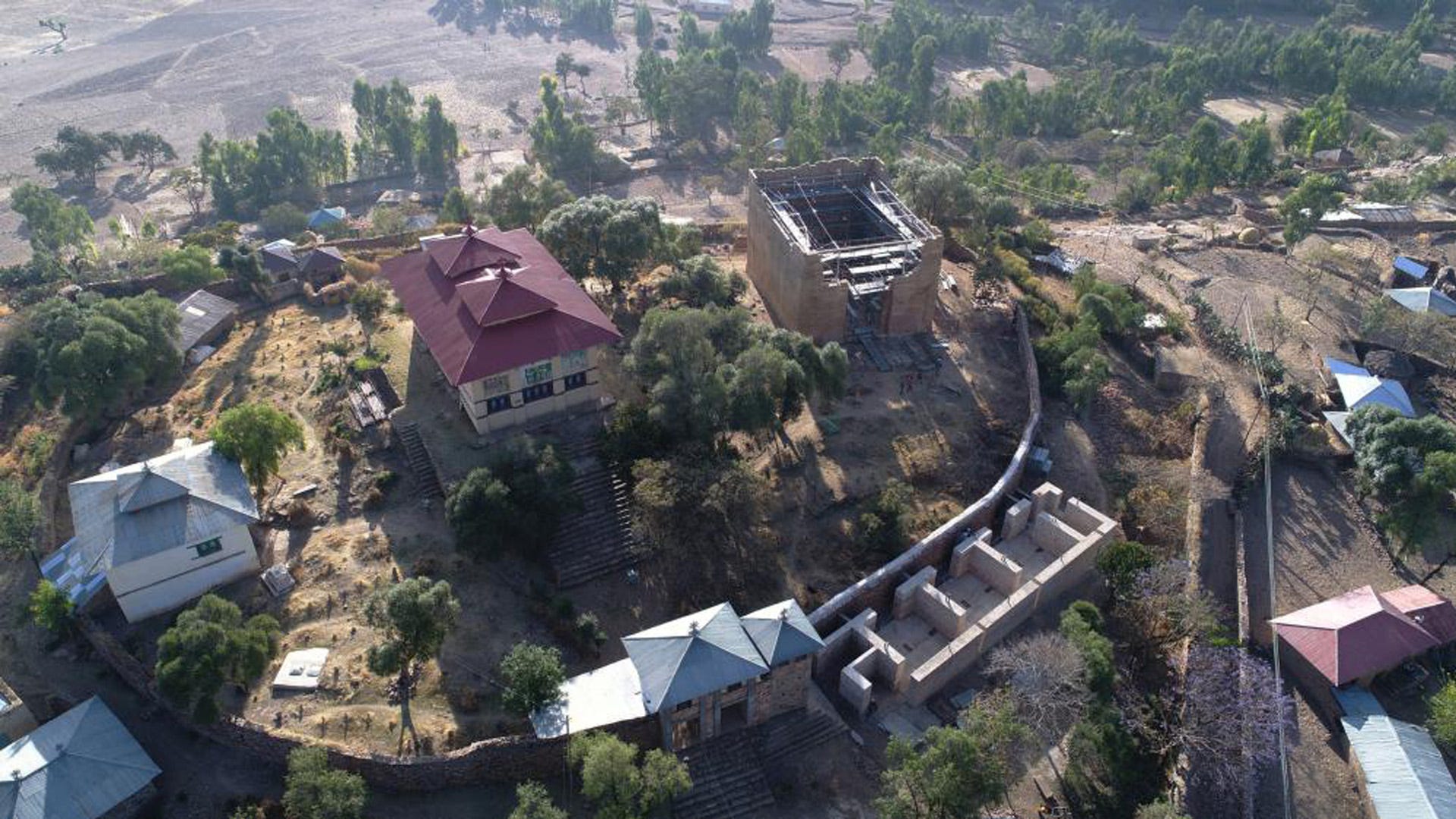
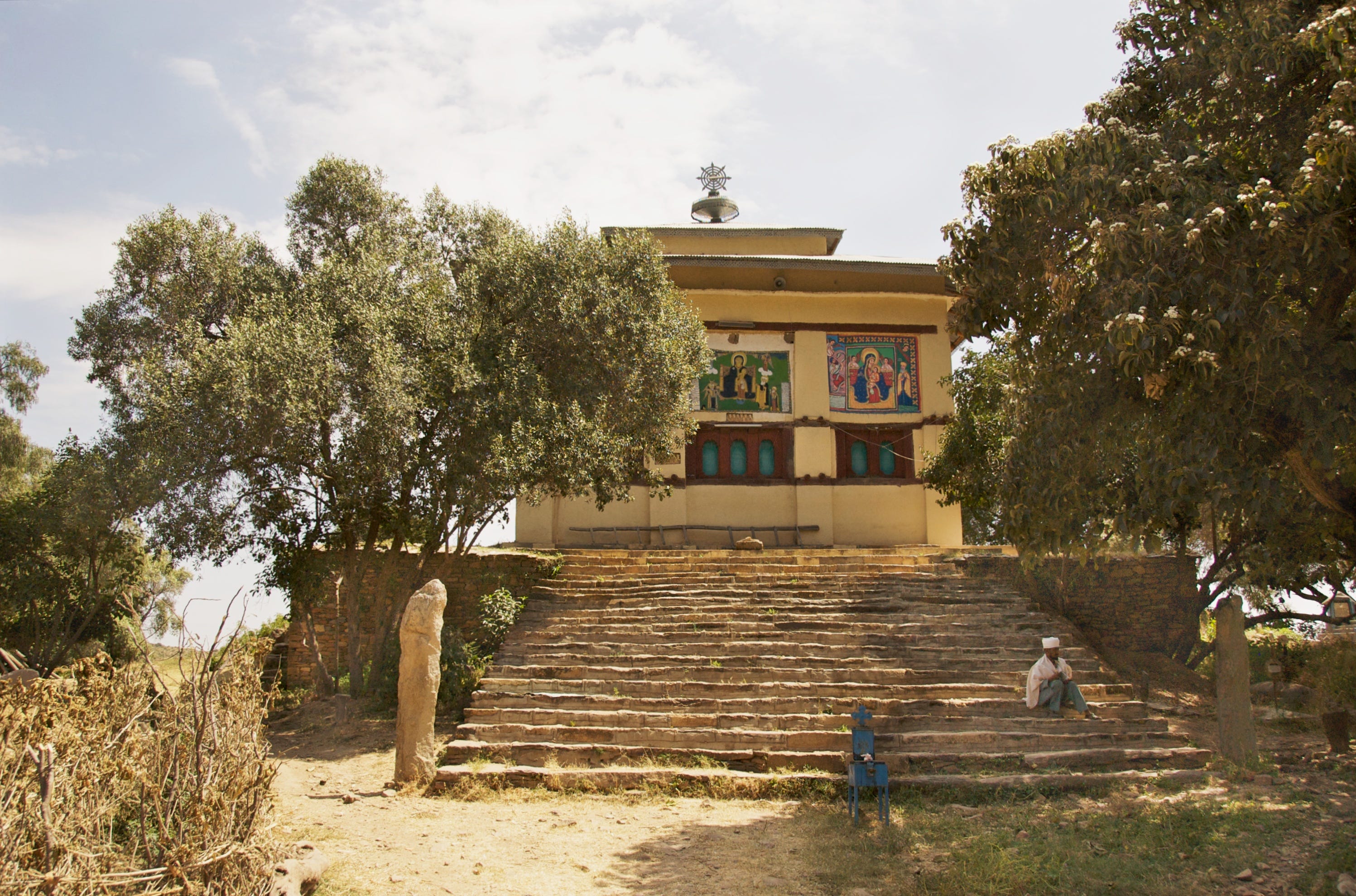
Extensive archaeological excavations have shed considerable light on the Great Temple’s structure and history. Its remarkable preservation is largely due to its conversion into a church dedicated to Abba Aftse, likely around the 6th century AD. This adaptation not only safeguarded the building but also embedded it within the religious life of the Ethiopian Orthodox Christian community.
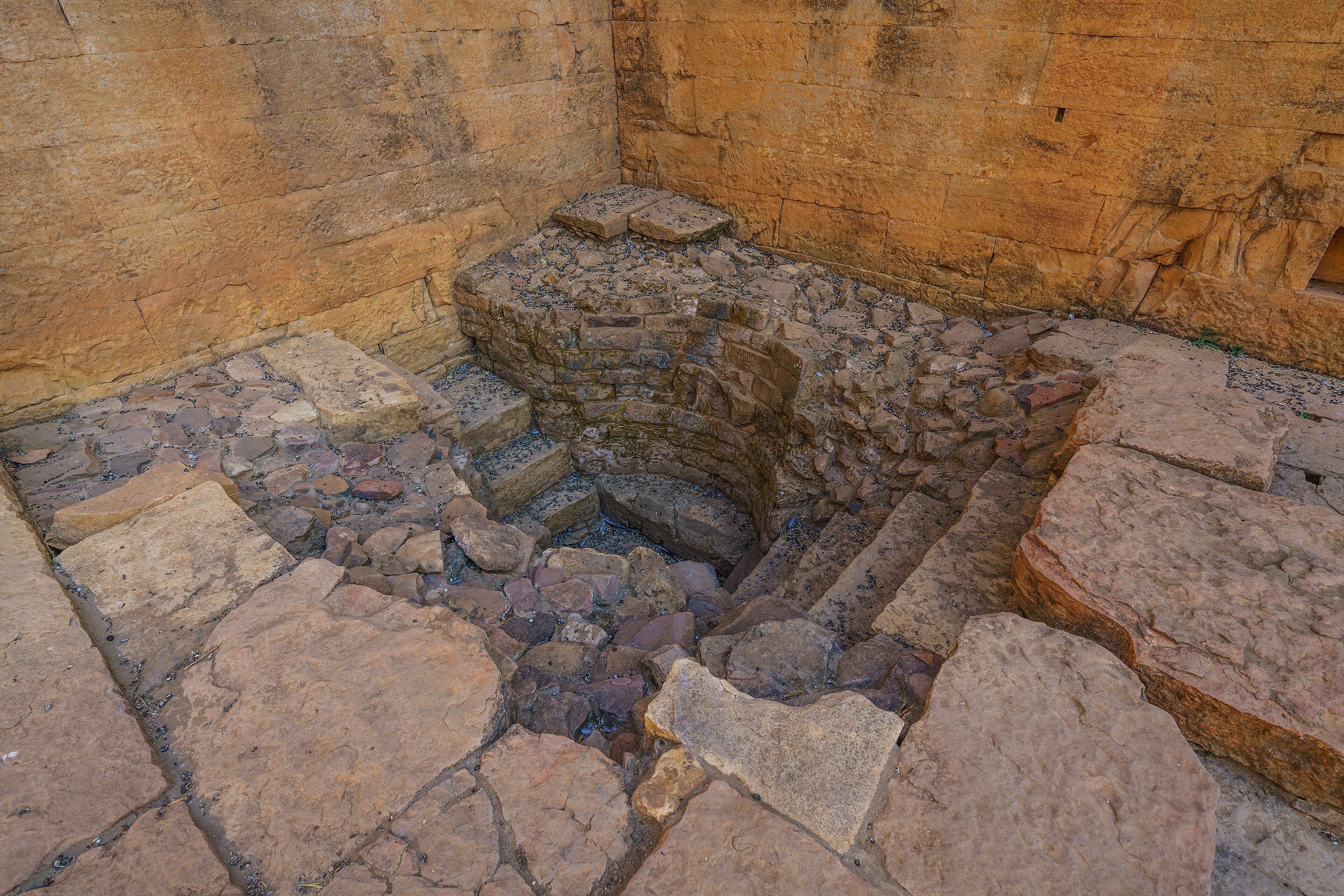
The Baptismal Basin inside the Yeha Temple. Source
An Aksumite era baptismal basin can still be found in the southeastern corner of the Great Temple (at the back right when viewed from the western entrance)5.
To this day, the temple hosts major annual religious festivals (such as around 5-6th June6 for commemorating Abba Afṣe), reflecting its enduring significance as a sacred site7.
Numerous foreign travellers, such as the Portuguese explorer Alvares, who visited Yəḥa in the early 16th century AD, noted the existence of this ancient structure:
“We went this day to sleep at a town between the peaks called Abafacem,in which town is a very good church of Our Lady, well built, with the middle aisle raised above the two sides or edges, with its windows very well constructed, and all the church vaulted. We had not seen any of this type in this country: in Portugal, in Entre Douro and Minho, there are monasteries of this type. Close to the said church is a very large and handsome tower, both for its height and the good workmanship of the walls, and for its width; it is already getting damaged, and yet it is plain it was a royal affair, all of well-hewn stone: we have not seen such another building” - The Prester John of the Indies, Volume I, pg 140 & 141.
A few centuries later, in the early 19th century, the English traveller Henry Salt passed through Yeha during his travels in Abyssinia and remarked upon the remarkable architecture of the Temple of Yeha.
“The square building bears the appearance of having been very substantially constructed. The remains of the walls, now standing, occasionally rise to the height of forty feet, measure full five feet in thickness, and are formed of large masses of stone, each about seven feet long by twenty inches broad, exactly fitted one to the other, so as scarcely to leave a visible interstice between them; no mortar or other fastening having been, as I conceive, ever made use of throughout the building.
The stone composing this structure consists of a sand-stone of a light yellowish cast, covered over with a hard incrustation, which has materially served to protect the surface of the walls from the effects of the weather; so that the portion still remaining affords as perfect a specimen of plain architecture, as can be produced, perhaps, in any other part of the world.” - Henry Salt, A Voyage to Abyssinia, and Travels into the Interior of that Country, pg 429-433.
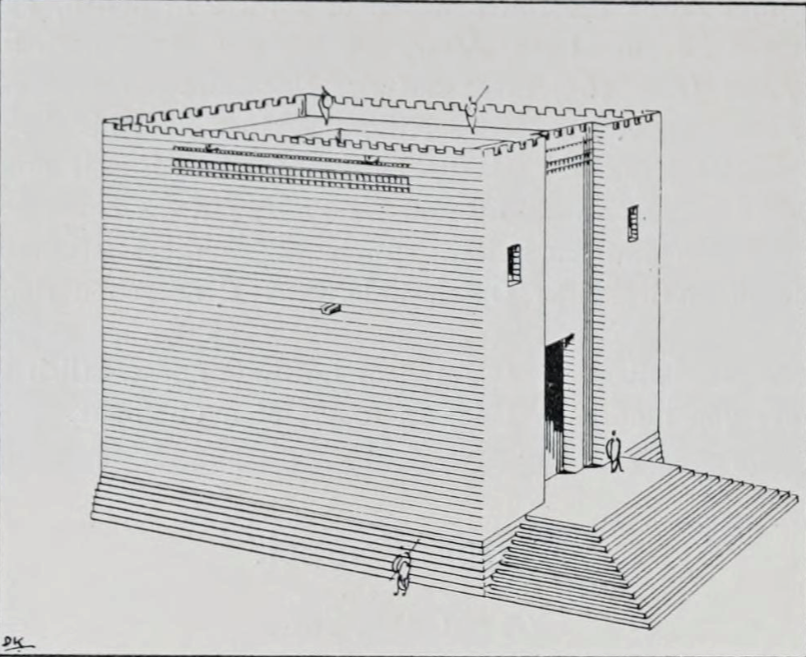
An early twentieth-century reconstruction of the Temple of Yeha by German archaeologist and architect Daniel Krencker. Source
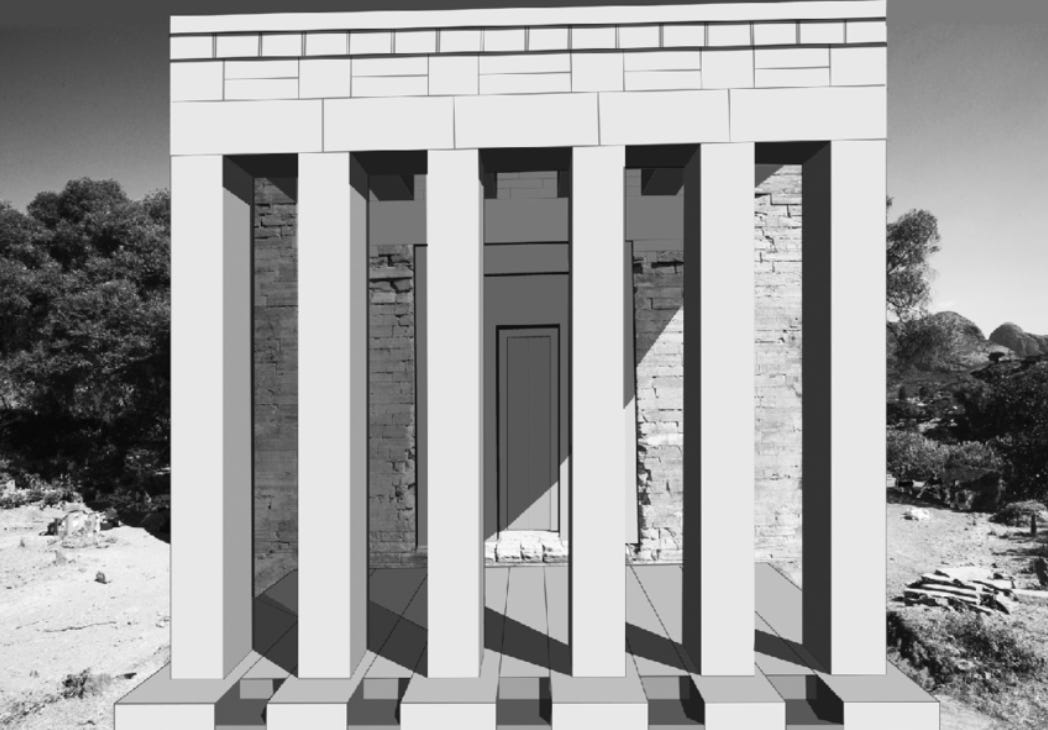
The structure spans 18.6m in length x 15.0 m in width and has a height of 13 meters8; the walls consist of rectangular blocks of limestone. The Great Temple originally featured a large porch at its west that extended over 5.1m9 with six rectangular pillars, a design element that finds parallels in structures in southern Arabia. From the entrance, the double wooden doors opened to reveal a narrow passageway leading to the temple10.
No mortar was used in the construction, and aside from the frames, no wood was employed11.
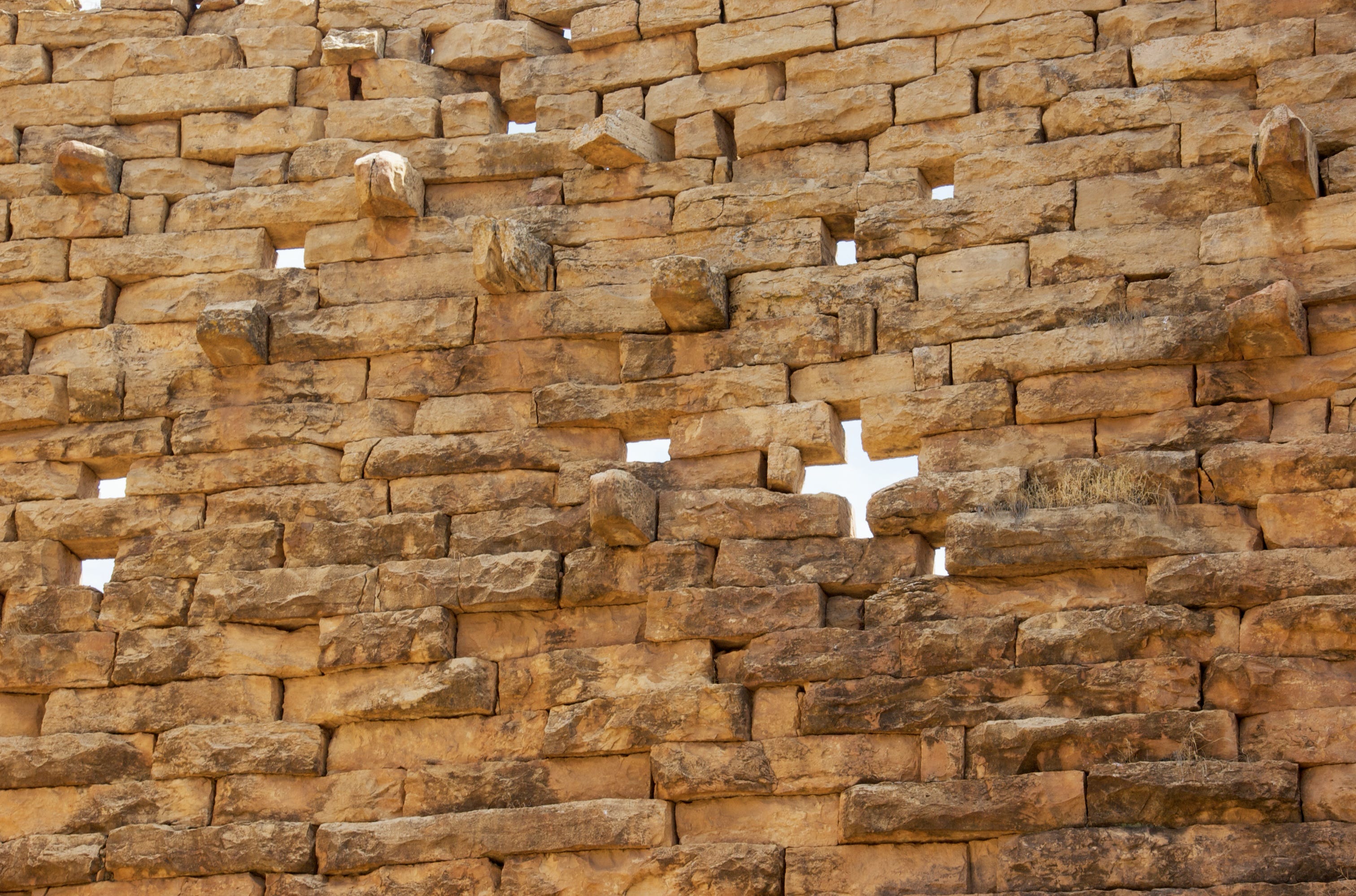
Limestone ashlar blocks forming one of the upper walls of the Great Temple of Yeha, Tigray. Source
Ashlar masonry is a type of stonework used in the construction of many ancient buildings, such as the Great Temple of Yeha & Machu Picchu. It features finely cut and dressed stone blocks, typically rectangular or square, that fit together with minimal gaps12.
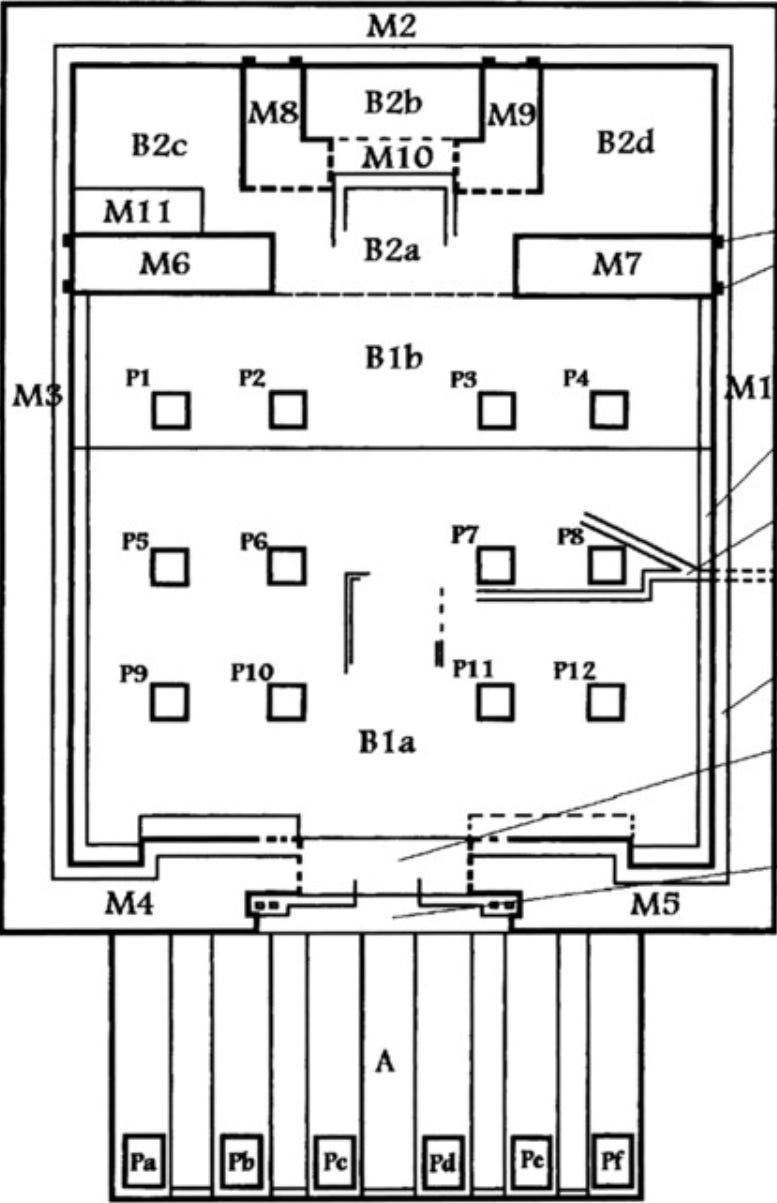
Yəḥa Temple Interior Layout. Source: Le Grand Temple de Yéha (Tigray, Éthiopie), après la première campagne de fouilles de la Mission françaisem Figure 22.
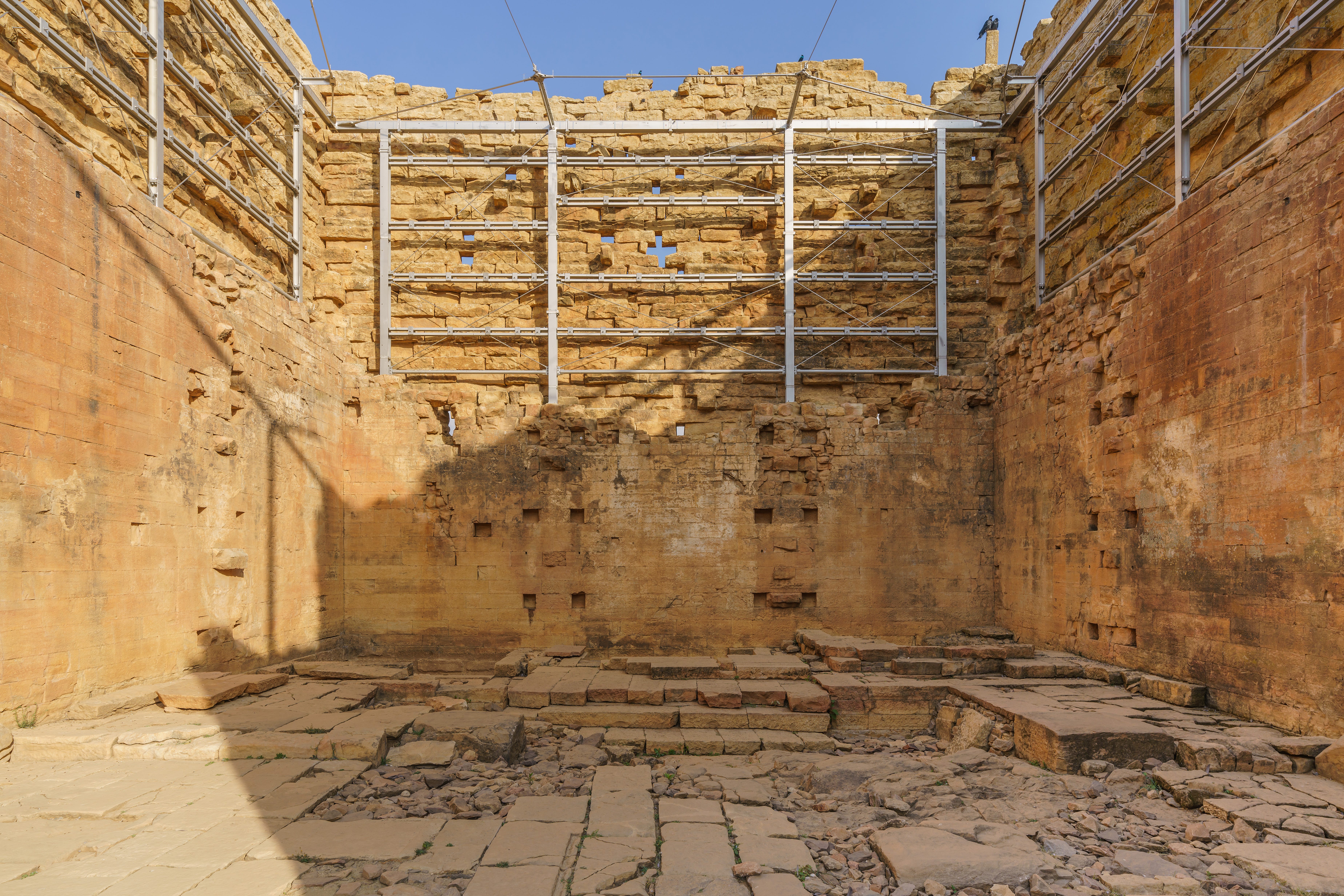
The structure comprises a ground floor with evidence for a second storey, while the roof appears to have covered most of the temple, leaving the central area above the altar open to the sky13. The interior dimensions are 12.6m by 11.3m, comprising a central nave flanked by two sides, each with two aisles separated by square pillars (totalling five aisles). An inner drainage system, likely used to channel liquid runoff (for ceremonial rituals on the altar), is also evident at the southern section. At the rear of the temple, a stepped entrance leads to three rooms (likely the sanctuary)14.
It’s likely the Yəḥa Temple, had an altar with a similar function16.
Left: Present-day interior of the Yəḥa Temple; right: my reconstruction based on the scientific evidence presented in the article.
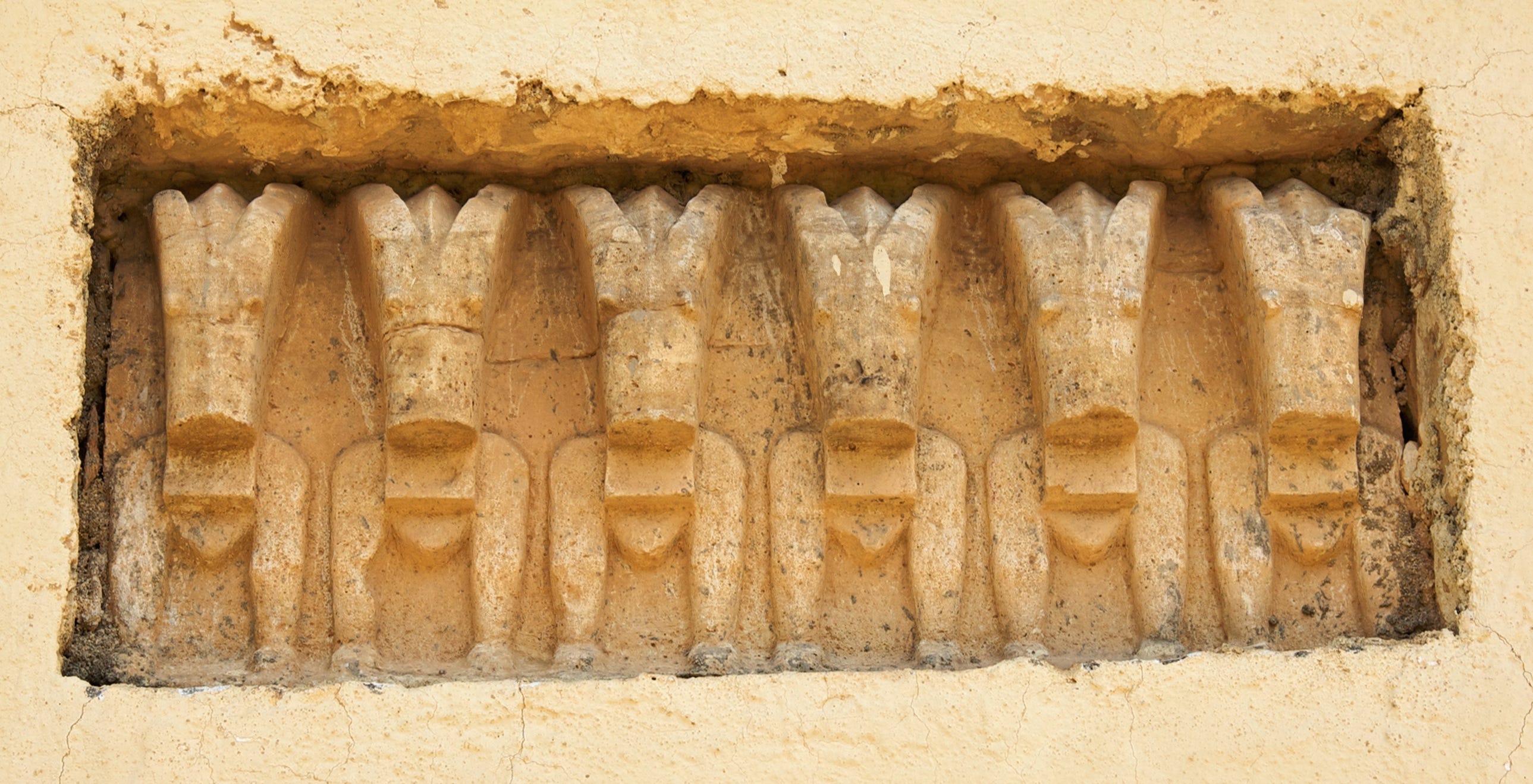
Ibex carvings, now part of the exterior of the Abba Afsé Church at Yəḥa. Source.
These ibex carvings, now located at the nearby church of Abba Afsé in Yəḥa, may have originally been part of the temple’s exterior itself17. Ibexs are a common motif found in classical era art in the region, especailly in southern arabia, representing fertility18.
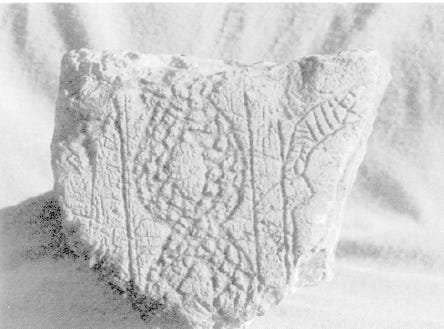
Two Intertwined Serpents Depicted on a Limestone Fragment Found at the Great Temple of Yeha, Source: Christian Julien Robin & Alessandro de Maigret, Le Grand Temple de Yéha (Tigray, Éthiopie), après la première campagne de fouilles de la Mission française (1998), Comptes rendus des séances de l’Académie des Inscriptions et Belles-Lettres, 142(3), 1998, pp. 737–798, Fig. 51
Before the construction of the palace, archaeologists found evidence of an earlier structure19.
Could this older Temple have been a place of worship for an even older pagan religion? Possibly the serpent god Arwe? the Intertwined Serpent Figure found at the temple would lead us to believe that this is a possibility.
Grat Be'al Gebri: Elite Architecture
Grat Be'al Gebri roughly translates to “Place” or “Field of Celebration and Tribute.”
Another significant discovery at Yəḥa was Grat Be'al Gebri, often referred to as a ‘Palace’. The structure likely served as a residential and administrative hub for the local ruling elite (Likely the kings of DʿMT and their entourage). Archaeologist Francis Anfray has dated the structure to between the 5th Century & 2nd century BC20.
Some archaeologists argue that, given its elevated position, the large basement spaces, the thickness of its walls and the number of rooms, the structure was more likely intended for religious rather than administrative use.21
Before the construction of the palace, archaeologists had found that an earlier structure existed22.
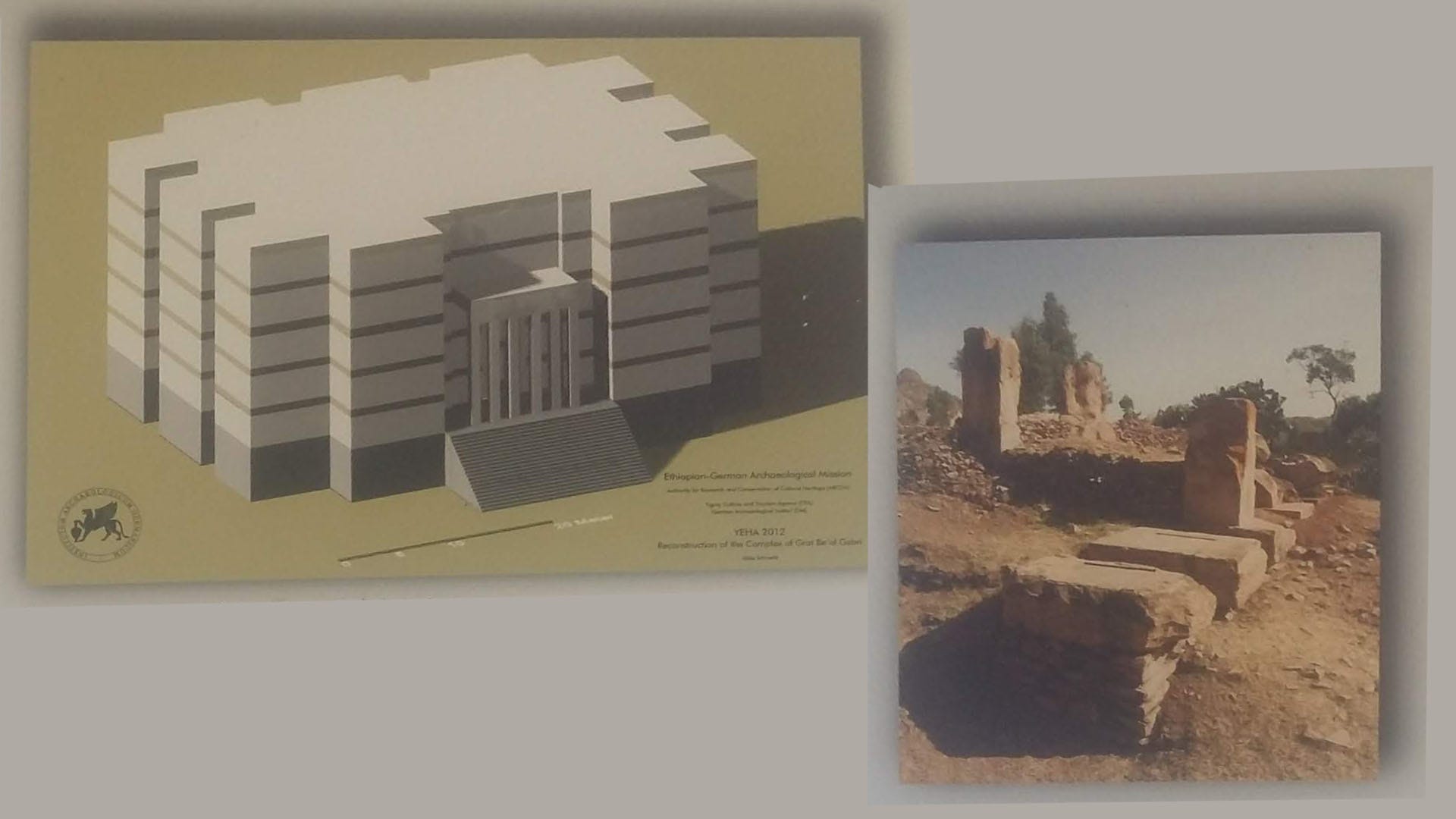
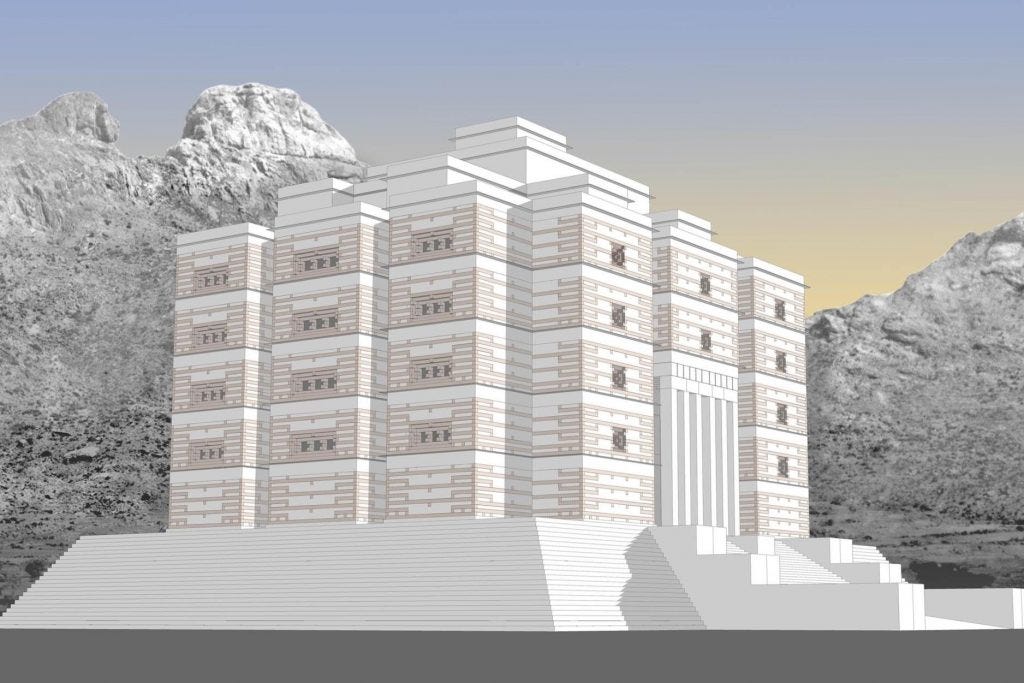
The building spanned at least 46 x 46 meters and included a 4.5-meter-high podium. This podium housed an interior chamber system23. It was constructed primarily from timber & locally quarried stone (a characteristic common in later “Aksumite Era” structures as well)24.
The primary entrance was marked by a six-pillar, roofed porch, the bases of which, along with some pillar remnants, remain today. Behind this grand entryway lay a large gated doorway leading into a hallway, which in turn opened into a corridor that bisected the building. This corridor provided access to various rooms, although the specifics of these rooms remain poorly documented due to the building's deteriorated condition25.
Remanents Of The Staircase Entry Into Grat Be'al Gebri
Grat Be'al Gebri showcases two principal phases of construction, each illustrating different architectural techniques and cultural influences. Initially, this monumental building was erected with a distinctive South Arabian influence, featuring a stepped podium and a front porch supported by pillars. Unfortunately, this initial structure met its demise likely through a catastrophic fire, leading to its destruction26. The earliest section of the building is the outside staircase entrance, which is estimated to be dated to around 750 BC-500 BC27. This staircase had more than 24 steps28!
Reconstruction Of Grat Be'al Gebri & My Colored Reconstruction. Source: Preliminary Structural Analysis for the Archaeological Reconstruction of the Ancient Palace Grat Be'al Gibri in Yeha, Ethiopia, Journal Of Architectural Engineering Technology
A second building phase followed, during which a new structure was erected directly over the ruins of the first. This later construction employed different walling techniques, possibly including the ‘monkey head’ method, a style common in the Aksumite Era that used timber framing combined with rubble stones and mud mortar. Stratigraphic (analysis of rock layers) test pits at the base of the podium also revealed evidence of occupation that predated the construction of the original building29.
Grand multi-storey buildings like this existed during the Aksumite period and in later eras such as the Zagwe period and the Solomonic era. This particular structure may have been one of the earliest elite buildings constructed in the region.
Reconstruction Of Grat Be'al Gebri & My Colored Reconstruction. Source: German Archeological Institute
Excavations and tests in the areas surrounding Grat Be'al Gebri have uncovered several intact artefacts. Items from the second phase of the building’s use include a variety of objects, such as vases and jars.
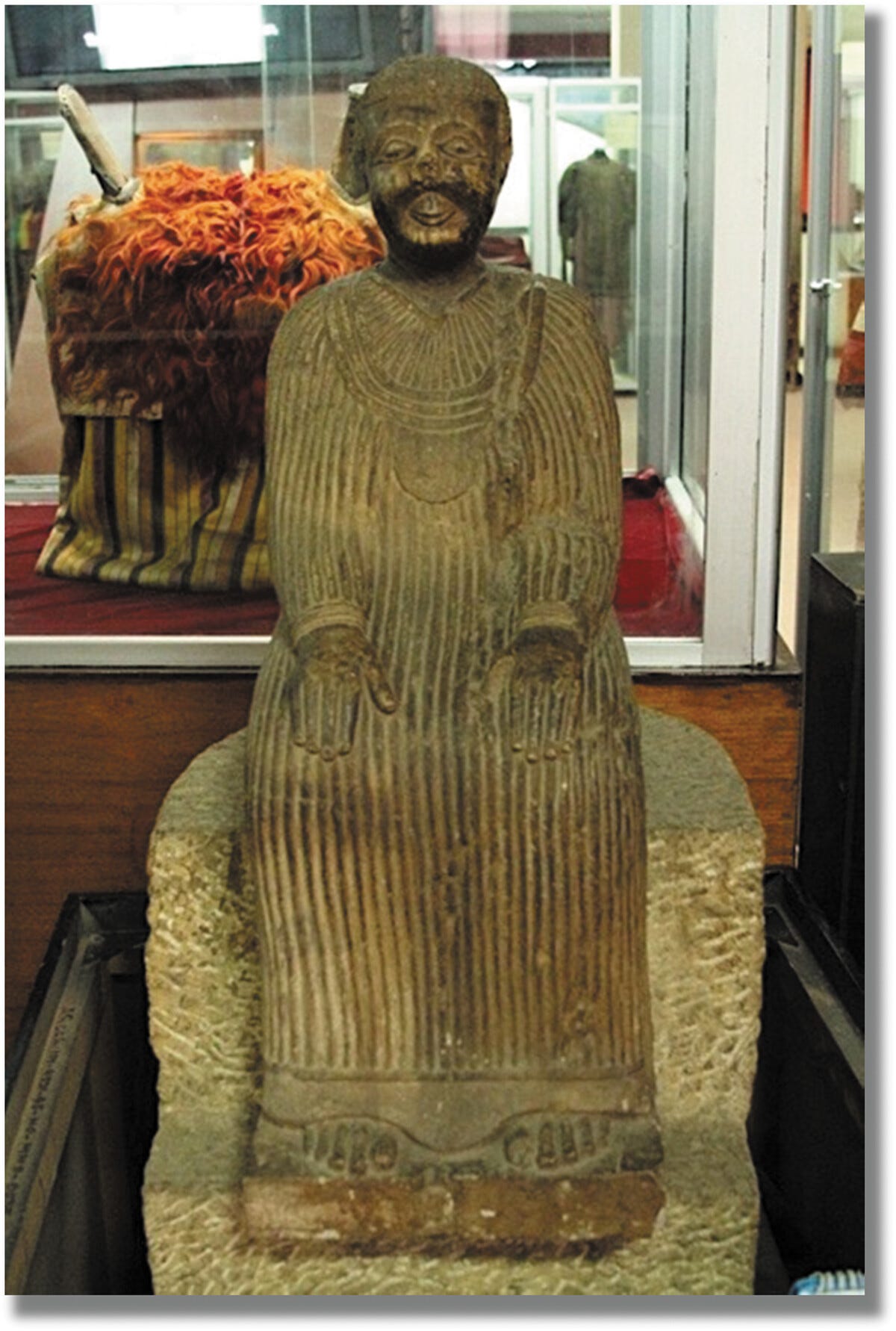
A remarkable discovery, though not made at Yəḥa itself but rather to the south at the site of Hawelti, was a statue of a woman dressed in traditional cotton attire resembling a modern-day Kemis. Nicknamed the “Queen of Yəḥa,” it dates to the same era in which Yəḥa flourished.
Queen Of Yəḥa Statue, In The National Museum Of Ethiopia. Source
Could the “Queen of Yəḥa” be linked to the Queen of Sheba? While the idea may seem unlikely, the dating of this period, combined with Yəḥa’s strong Sabaeic influence, leaves room for the possibility of a prominent queen whose legacy may have later evolved into the Queen of Sheba narrative preserved in the Kebra Nagast.
Queens appear frequently in inscriptions and physical artefacts, including statues, from the DʿMT period. Scholars point out that this degree of female prominence is not reflected in contemporary South Arabian culture, suggesting it was a distinctive and indigenous feature of DʿMT and Yəḥa30.
The Necropolis
Further south of the aforementioned buildings lies the necropolis known as Daro Mikael, a large burial site where tombs, likely belonging to the elite of DʿMT society, have been uncovered. These tombs reflect a culture that valued the afterlife and its preparation, particularly for wealthier citizens.
Professor Rodolfo Fattovich has suggested that the tombs date to around the mid-first millennium BC, with evidence indicating continued use into the late first to early second millennia AD31.
The tombs at Yəḥa are believed to have been used for rulers of the surrounding areas, likely of the elusive DʿMT kingdom. Interestingly, similar subterranean tombs were constructed for Aksumite rulers at Aksum over a millennium later, suggesting that this burial tradition may have originated in Yəḥa.
Daaro Mikael
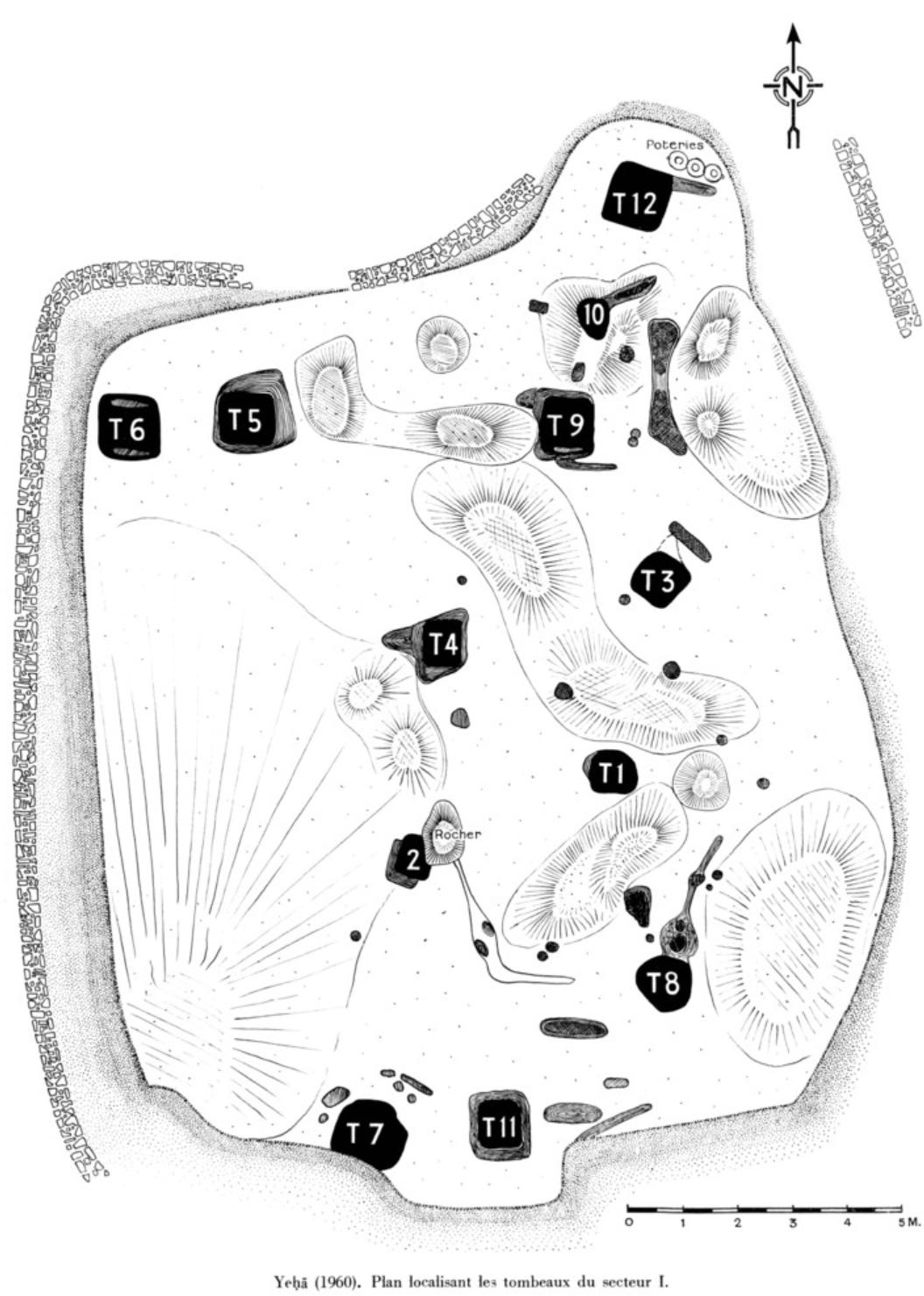
Yəḥa(1960). Map showing the location of tombs in Sector I. Source: F. Anfray 1963a. Une campagne de fouilles à Yéha), CXV
In the 1960s and 1970s, the Ethiopian Institute of Archaeology, led by archaeologist F. Anfray, conducted excavations at Daaro Mikael, located at the Necropolis south of Yəḥa. The team uncovered seventeen tombs and two burial chambers, most of which contained various types of pottery and artefacts, with some even holding skeletal remains32.
Tombs At The Necropolis At Daro Mikae- Source: F. Anfray 1963a. Une campagne de fouilles à Yéha)
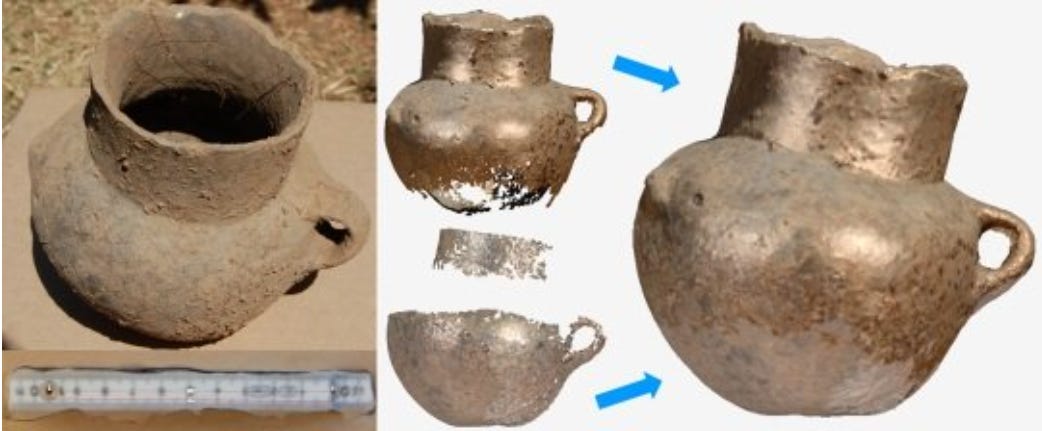
These artefacts included storage vessels like large vases for holding grain, cauldrons for cooking, and possibly even early forms of Jebenas used for brewing coffee. Other items found included tools for cutting wheat, bracelets, necklaces, incense burners, and objects from later periods, such as crosses.
Various Artifacts Found At The Necropolis
Seals
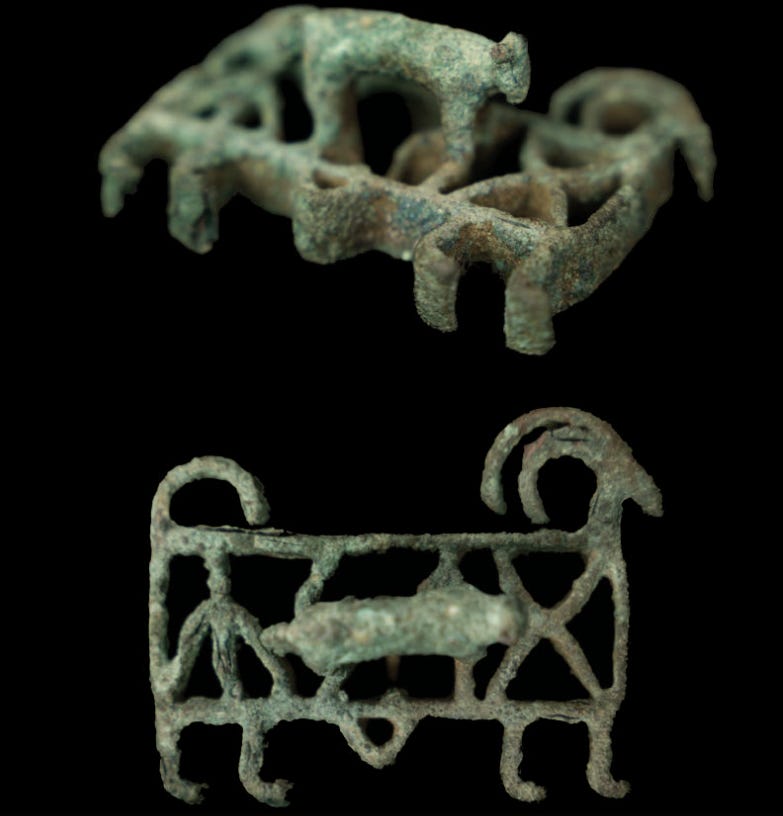
Seals found at Yeha. Source: CFEE / National Museum of Ethiopia (soleb), Guidebook: National Museum of Ethiopia, Historical Archaeology Exhibition (2016), 27.
Among the artefacts discovered were bronze seals, some bearing Sabaean script and motifs such as the ibex, an animal associated with the god Almaqah. However, these seals also featured indigenous elements not found in southern Arabia.
Bronze Identity Seals, Found At The Necropolis at Daro Mikae.Source: F. Anfray 1963a. Une campagne de fouilles à Yéha), CLIV
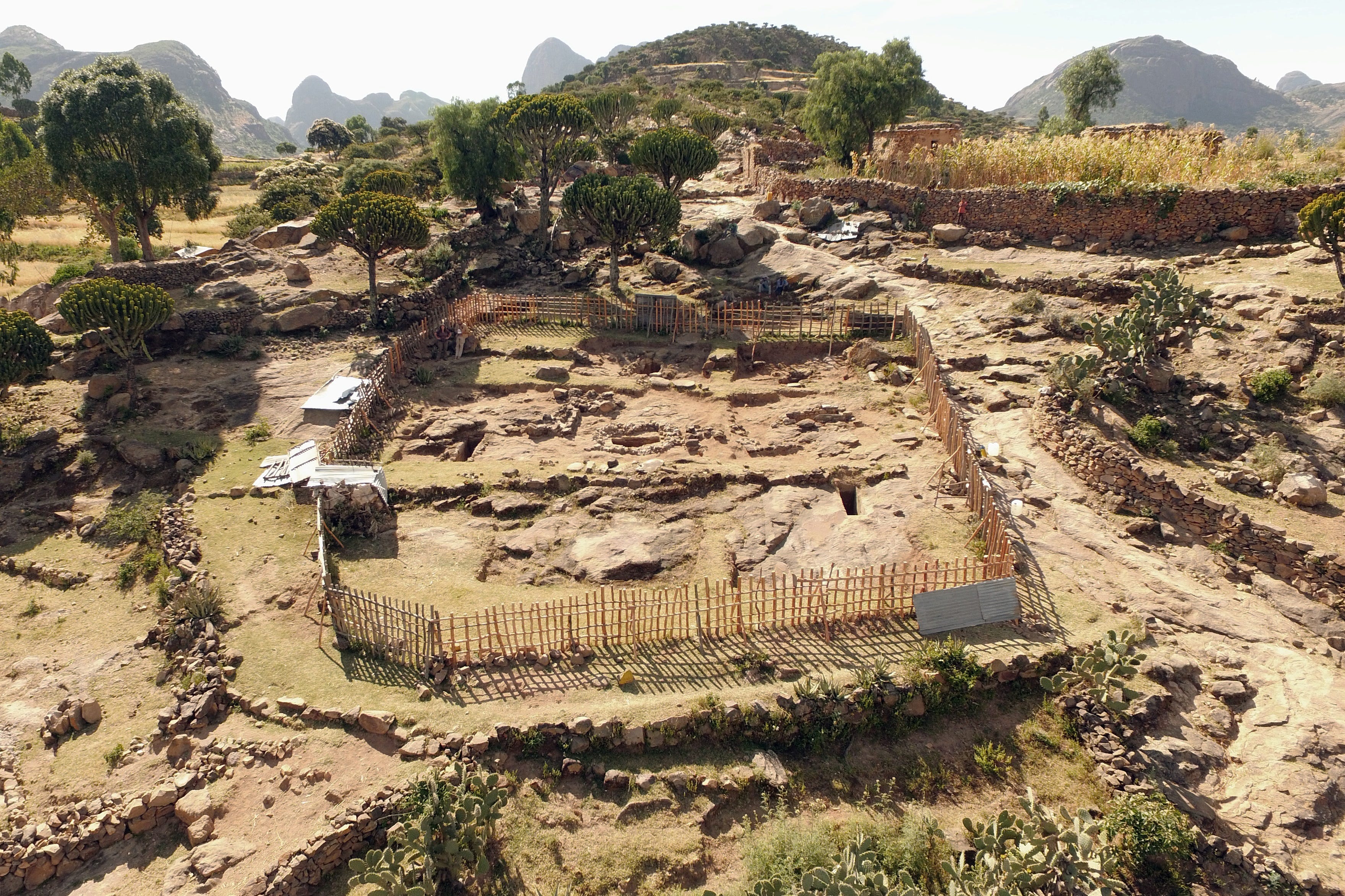
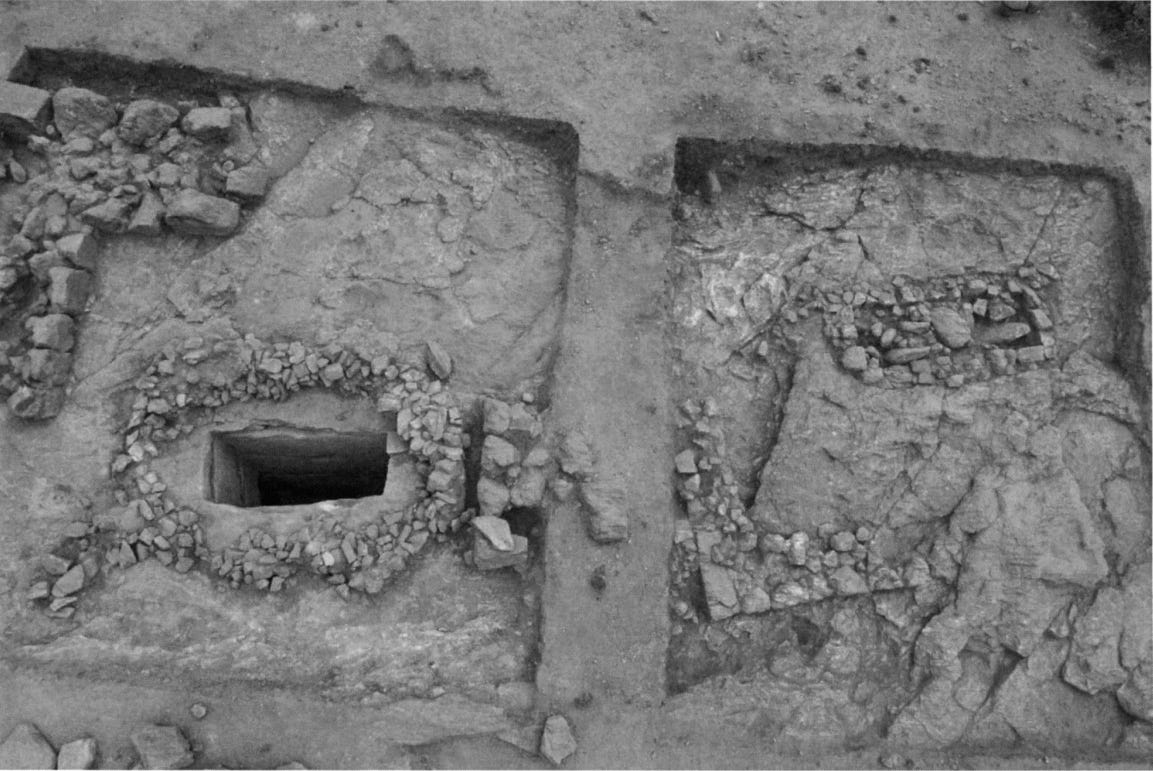
Aerial Photograph of two tombs at the Yeha Necropolis. (Source: Yeha and Hawelti: cultural contacts between Saba3 and DCMT - New research by the German Archaeological Institute in Ethiopia, pg 153).
In the autumn of 2009, a joint Ethiopian–German archaeological team surveyed the area of Yəḥa, focusing on the hill slope of Abiy Addi opposite the ancient settlement. During the survey, they identified a necropolis with visible traces of burial sites. Local residents reported that one tomb contained a shaft and staircase, suggesting the presence of subterranean burial chambers33.
Further excavations in the spring of 2010 uncovered six rock-cut tombs, each with a 2.5-metre-deep vertical rectangular shaft and a grave chamber at each of the narrow ends. The chambers varied in size, with some reaching up to 4 metres in length and 1.2 metres in height. The entrances were originally sealed with rectangular stones, though most were missing at the time of discovery.34
Interestingly, rock-cut tombs of this type appear don’t appear in South Arabia until the 1st century AD, suggesting that such burial practices were indigenous to the region35.
Brief Timeline of Events and Interaction with Peripheral States
Phases of “Pre-Aksumite” Yəḥa Settlement, based on Reconsidering Yeha, c. 800–400 BC by Rodolfo Fattovich, pg 282.
Pottery resembling the style found at Yəḥa, which in Phase 1 was mostly confined to local areas, saw a wider distribution in Phase 2. This spread reached beyond Tigray into Akkele Guzay, suggesting increased interaction and cooperation between the populations of these regions. In contrast, ancient Ona sites in Asmara maintained their distinct ceramic traditions, though fragments of Ona jars have been found in both Akkele Guzay and Tigray. This points to the possibility of trade, while also indicating that the Ona sites & Yəḥa each retained a unique culture and perhaps their own elite classes36.
Therefore, it’s likely that during this period, multiple polities coexisted across the highlands of northern Ethiopia and Eritrea. However, DʿMT and by extension Yəḥa was without doubt one of the most, if not the most, powerful polities in the region at the time.
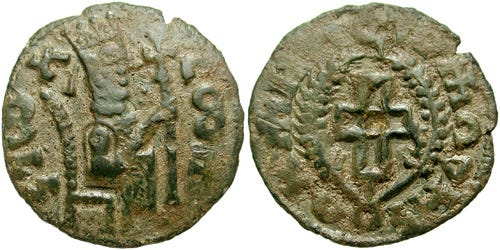
Yəḥa continued to occupied after the DʿMT period, evidence of this includes coins of Emperor Armaḥ37, a ruler of the late Aksumite era (post 6th century AD).
Yəḥa is one of the most renowned and extensively studied sites of the early classical era in the first millennium BC. Rightfully so, as it contains several important structures, including a grand temple, an elite residence resembling a palace, and burial tombs for the ruling class. Likely among the most urbanised centres of its time, Yəḥa played a pivotal role within the DʿMT kingdom. Despite decades of study, our understanding of the site is still in its early stages, and further discoveries are almost certain. Yəḥa provides some of the earliest evidence of a hierarchical society in the Horn of Africa & was likely the key centrepiece in the history of DʿMT.
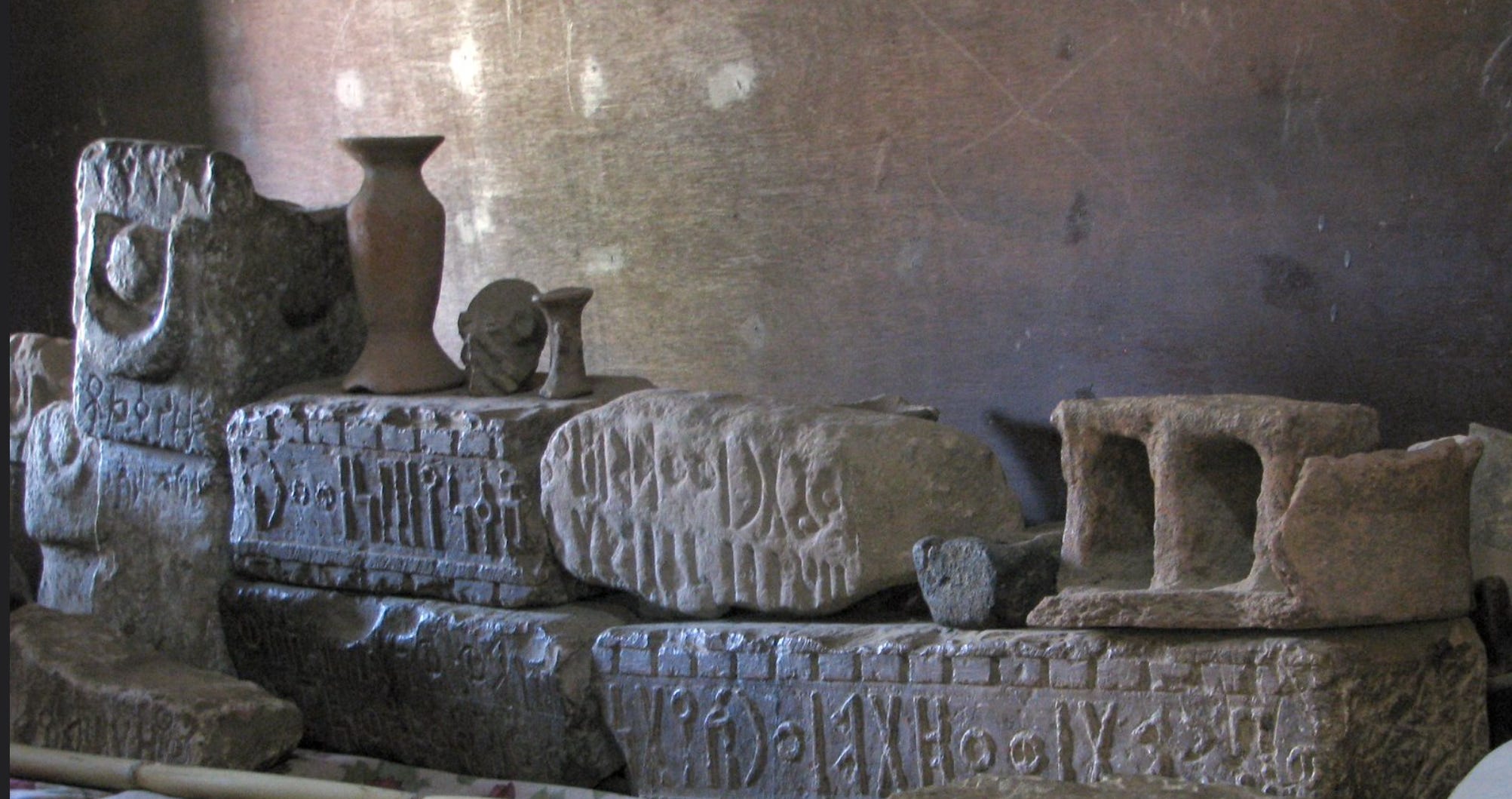
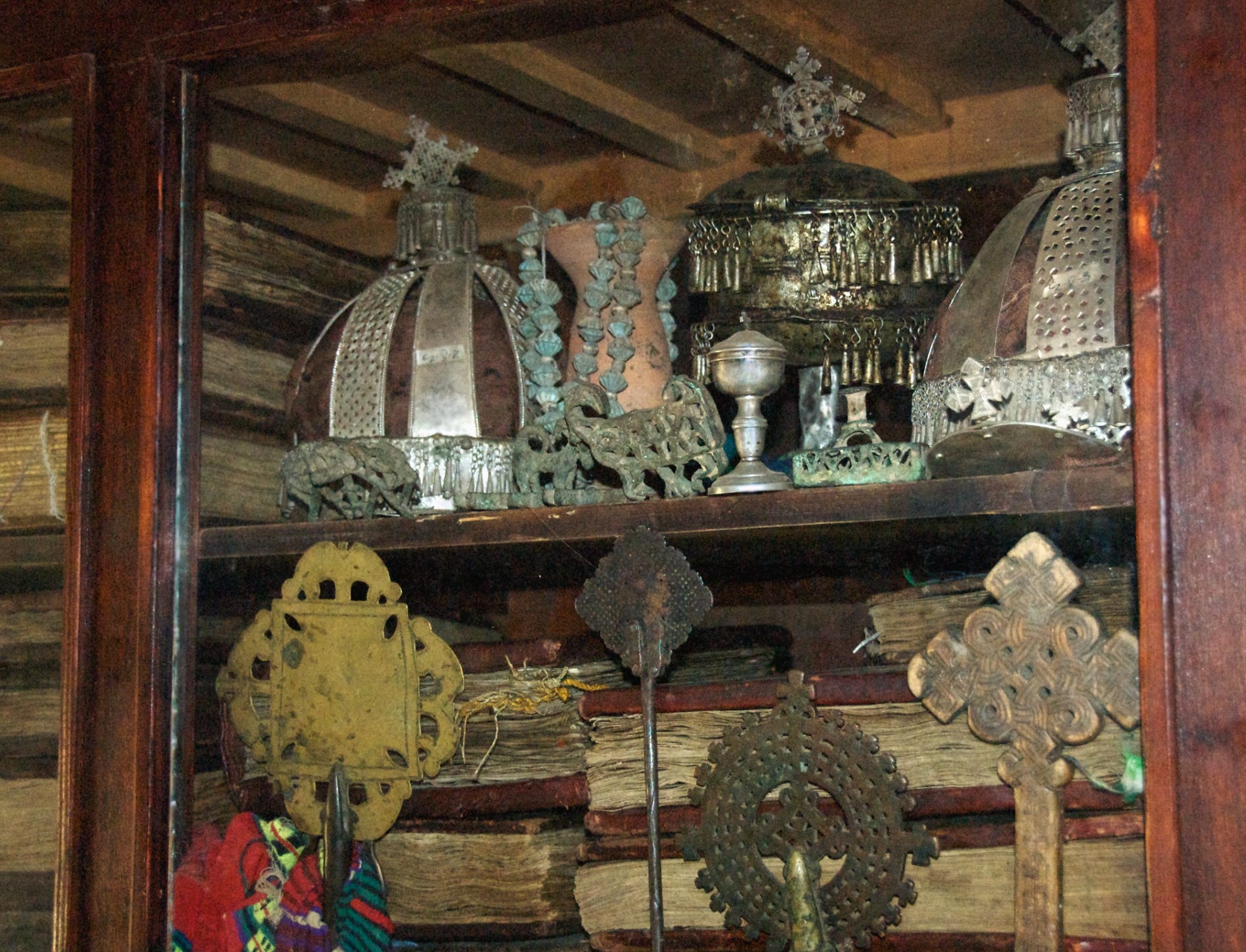
Various artifacts & manuscripts are now situated in a building near Ǝnda Abba Afṣe. Source
Further Readings
The following research papers are recommended for readers interested in exploring Yeha’s history in greater depth:
Francis Anfray, “Yəḥa,” in Alessandro Bausi and Siegbert Uhlig, eds., Encyclopaedia Aethiopica, vol. 5 (Wiesbaden: Harrassowitz Verlag, 2014), pp. 42–43.
Yeha and Hawelti: cultural contacts between Saba and DMT - New research by the German Archaeological Institute in Ethiopia by Sarah Japp, Iris Gerlach, Holger Hitgen & Mike Schnelle (pg, 147).
Yeha and Hawelti: cultural contacts between Saba and DMT - New research by the German Archaeological Institute in Ethiopia by Sarah Japp, Iris Gerlach, Holger Hitgen & Mike Schnelle (pg, 148).
Japp, Sarah, Iris Gerlach, Holger Hitgen, and Mike Schnelle. “Yeha and Hawelti: Cultural Contacts between Sabaʾ and DʿMT — New Research by the German Archaeological Institute in Ethiopia.” Proceedings of the Seminar for Arabian Studies 41 (2011): 145–160, especially p. 148.
Christian Julien Robin & Alessandro de Maigret, “Le Grand Temple de Yéha (Tigray, Éthiopie), après la première campagne de fouilles de la Mission française (1998), pg 758
Christian Julien Robin & Alessandro de Maigret, “Le Grand Temple de Yéha (Tigray, Éthiopie), après la première campagne de fouilles de la Mission française (1998), pg 748
Yeha and Hawelti: cultural contacts between Saba and DMT - New research by the German Archaeological Institute in Ethiopia by Sarah Japp, Iris Gerlach, Holger Hitgen & Mike Schnelle (pg, 150).
Yeha and Hawelti: cultural contacts between Saba and DMT - New research by the German Archaeological Institute in Ethiopia by Sarah Japp, Iris Gerlach, Holger Hitgen & Mike Schnelle (pg, 151).
Yeha and Hawelti: cultural contacts between Saba and DMT - New research by the German Archaeological Institute in Ethiopia by Sarah Japp, Iris Gerlach, Holger Hitgen & Mike Schnelle (pg, 154).
Yeha and Hawelti: cultural contacts between Saba and DMT - New research by the German Archaeological Institute in Ethiopia by Sarah Japp, Iris Gerlach, Holger Hitgen & Mike Schnelle (pg, 153).
Yeha and Hawelti: cultural contacts between Saba and DMT - New research by the German Archaeological Institute in Ethiopia by Sarah Japp, Iris Gerlach, Holger Hitgen & Mike Schnelle (pg, 153).
Yeha and Hawelti: cultural contacts between Saba and DMT - New research by the German Archaeological Institute in Ethiopia by Sarah Japp, Iris Gerlach, Holger Hitgen & Mike Schnelle (pg, 154).


















.jpg)


 Tiktok failed to load.